On July 22, 2026, the Federal Circuit handed down a nonprecedential yet strategically important decision in Shenzhen Jisu Technology Co., Ltd. v. The Entities and Individuals Identified in Annex A, affirming a district court’s reversal of a preliminary injunction in a design patent “Schedule A” case involving foldable fans sold on Amazon and Temu. The case is a useful guide into how later-issued design patents can complicate and undermine a design patent holder’s claim for preliminary injunctive relief.
From 11 August 2026, the prior consent of all individuals in France will be required for any telephone marketing from any caller regardless of the sector.
Under the Law n° 2025-594 of 30 June 2025 on “Combating All Forms of Fraud Involving Public Aid”, telephone canvassing of individuals (whether carried out directly or through a third party) is prohibited unless the organisation has first obtained the individual’s prior consent.
In order to obtain consent, the caller must be able to demonstrate that it has obtained a valid consent. In so doing, the requirements for obtaining consent are those of GDPR (General Data Protection Regulation), i.e. it must be free, specific, informed, unambiguous and revocable.
The consumer’s explicit consent must therefore be obtained. In so doing, consent may be explicitly obtained during a purchase, an in-store visit or through a form, and the business must be able to provide evidence that such consent was given.
It is also prohibited to make the sale of a product or the provision of a service conditional upon the customer’s consent to telephone marketing.
The EU Artificial Intelligence (AI) Act requires companies to disclose in certain cases whether content has been created or modified by AI. This also applies to companies that make use of AI such as image-generation programs for product advertising.
Given that the new rules are enforceable from 2 August 2026, with fines up to EUR 15 million or 3% of global annual turnover, the importance of compliance with these rules is now in sharp focus.
The good news is that for deployers of AI systems, besides chatbot disclosure, labelling obligations only apply in two scenarios: (i) AI-generated or manipulated texts aiming at informing the public on matters of public interest, and (ii) deep fakes[1].
Looking at all of this in more detail, what does this mean to companies that create and/or publish advertising and promotional content?
As AI systems continue to be adopted at scale, they are increasingly performing tasks carried out by human employees. From drafting documents, to writing code, to handling customer queries and concerns have grown about the economic risks this shift may pose, including job displacement and the erosion of the income taxes generated by human labour.
This rapid automation of roles raises difficult questions around labour displacement, reduction and redeployment. A direct economic consequence of this is the growing fiscal pressure that governments may face due to loss of income tax. This has renewed interest in proposals for a robot tax, alongside the emergence of AI policy research on alternatives such as token tax and FLOP tax, each targeting a different point in the AI value chain: labour displacement, AI-driven usage and compute power.
IPO records now show that Mr Littler’s company’s application was successful with a direct, photorealistic likeness of Mr Littler having been registered as a trade mark on 19 June 2026 for 11 different classes of goods and services [UK Intellectual Property Office trade mark number UK00004350490].
Mr Littler thereby joins a growing list of literally famous (or rather, distinctive) faces who have successfully secured trade mark registration in the UK for a general/generic photorealistic likeness of themselves, including the footballer Cole Palmer and television presenter Jeremy Clarkson. Trade mark filing practice has expanded beyond the more stylised images that were historically used to secure successful trade mark applications.
In a short but instructive opinion, the U.S. Court of Appeals for the Federal Circuit delivered a reminder about the relationship between claim language, written descriptions and the limits of what a patent’s claims can cover. Dynapass owns U.S. Patent No. 6,993,658, covering methods for authenticating users on a secure computer network using a two-component credential: a passcode that the user knows, and a token that the user receives via cell phone. The key idea is that these two pieces are combined into a single password, which the user then submits to receive access. This security protocol is of a form frequently referred to as “multi-factor authentication” (MFA).
As America celebrates its 250th year, the pulse of innovation that animated the Founders beats louder than ever. From the first patent debates to today’s courtroom clashes over artificial intelligence, George Washington’s legacy as a mill owner, pragmatic leader, and founding architect of the U.S. patent system remains strikingly relevant. Drawing on Washington’s own letters and historic drive for progress, we confront a question that now defines our technological era: When a machine surpasses its maker, who gets to claim the spark of invention, the human or the machine?
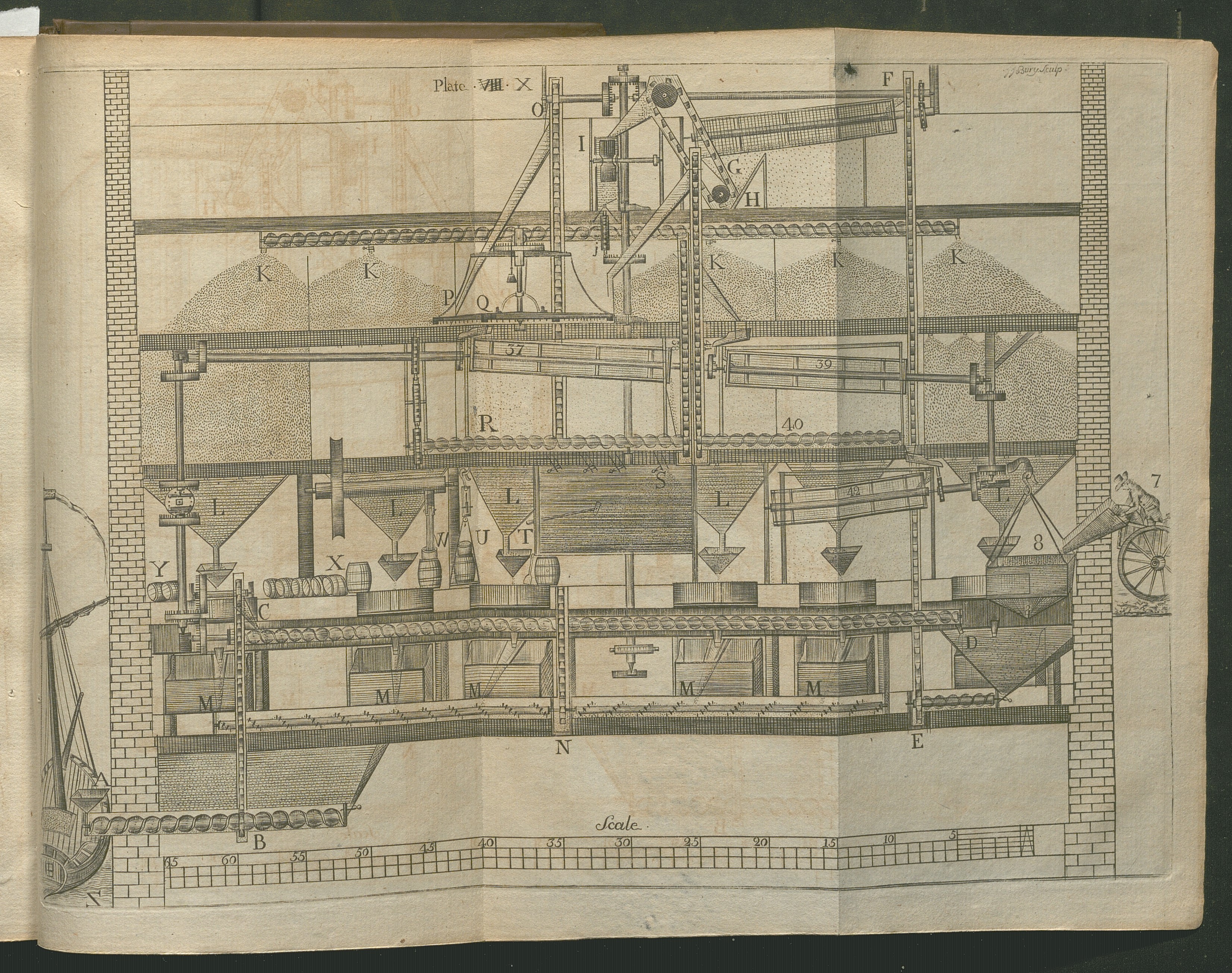
Imagine a frosty December morning in 1790 in Philadelphia. President George Washington—equal parts statesman, tinkerer, and entrepreneur—stands before Oliver Evans’ astonishing automaton. This isn’t just another machine: it’s an engineering leap, grinding grain into superfine flour at a speed no human crew could match, demanding barely a touch from its operators. When Washington signs the third U.S. patent for the Evans system, he’s not just endorsing invention—he’s witnessing a technological revolution poised to transform his own fortunes and the young nation’s future.
In a recent precedential decision by the Federal Circuit, the Court delivered a cautionary reminder that errors or omissions in a provisional patent application can have significant consequences for a patent’s priority claim and ultimately its validity.
In Enanta Pharmaceuticals, Inc. v. Pfizer, Inc., No. 2025-1427 (Fed. Cir. June 23, 2026), the Federal Circuit affirmed summary judgment that Enanta’s ’953 patent (U.S. 11,358,953) was not entitled to the priority date of its ’048 provisional application (Application No. 63/054,048) because the ’048 provisional lacked adequate written description support for a chemical substituent claimed in the ’953 patent. As a result, Pfizer’s public disclosure of its protease inhibitor, nirmatrelvir (the active ingredient in Paxlovid®), anticipated the claims of the ’953 patent, rendering the patent invalid.
On 17 June 2026, the Department for Transport and the UK government’s Centre for Connected and Autonomous Vehicles opened a new consultation inviting views from any interested parties on its draft statement of safety principles for automated vehicles [Automated vehicles: statement of safety principles consultation – GOV.UK].
The statement is a requirement under section 2 of the Automated Vehicles Act 2024, which established the legal basis for the regulation of automated self-driving vehicles on the roads in Great Britain.
Once finalised, the statement will set out the key safety principles which the Secretary of State will apply when assessing whether a vehicle should be considered capable of travelling autonomously and safely, with the overriding objectives being that:
The Federal Circuit recently issued a precedential decision not only reiterating that mere data collection is abstract under 35 U.S.C. § 101, but emphasizing that district courts must provide a sufficiently articulated basis for denying attorney’s fees. The opinion is yet another cautionary note to patent owners and attorneys seeking to enforce patents directed to data processing.
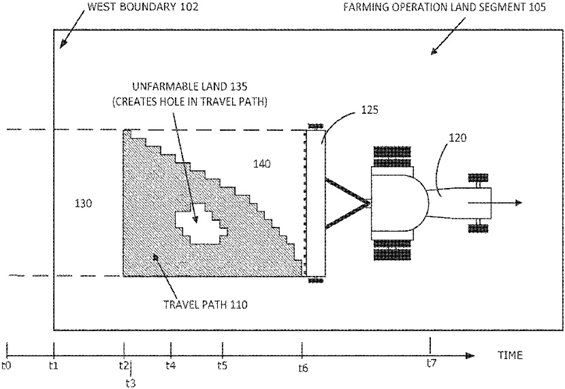
AGI SureTrack, LLC held five patents claiming variations of a “relay device” that clips onto a tractor’s data bus, reads messages from farm equipment in real time, cross-references stored “implement profiles” to decode manufacturer-specific protocols, pairs that data with GPS coordinates, and ultimately logs the completed farming operation to an electronic farm record. AGI sued precision-agriculture software provider Farmers Edge in Nebraska federal court, alleging infringement of all five patents.